
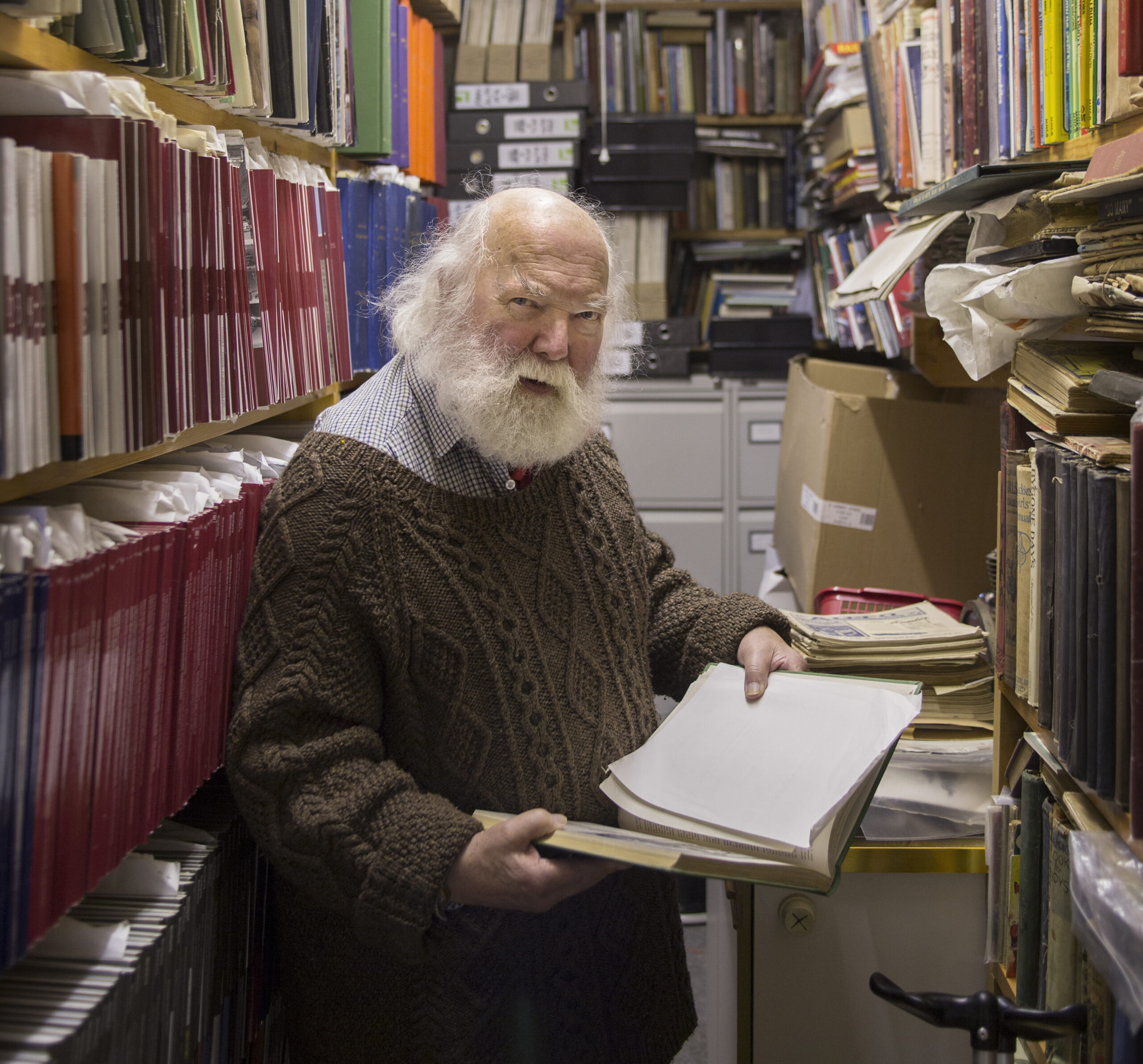
In tribute to M W-W, who has died aged 83, we reproduce Matthew Bell’s profile of him from our 35th Anniversary issue published in December, 2017.
When The Automobile was founded, 35 years ago this month, the barns of the world must already have been comprehensively raided. Few people would have imagined that, today, there would still be enough buried treasure to fill a monthly column. And yet, Finds & Discoveries continues to be a constant source of wonder and delight, not least to its author, Michael Worthington-Williams.
He will need no introduction to most readers, having contributed to these pages since the very first issue. For years, he has also written a monthly page on Automobilia as well as quarterly in-depth historical articles on individual makes often ignored by other writers.
Mike, or M W-W, or Worthy, is a man of many passions, and of great stamina. To meet him is like encountering Father Time: he has an air of wisdom, a fruity laugh, and has sported a generous white beard for as long as anyone can remember. His eyes twinkle with the mischief of one who has seen a lot, and done a lot more.
For someone so central to the fabric of The Automobile, and of the old-car scene, Mike lives a long way from anywhere, in Newcastle Emlyn, which is about as far west in Wales as you can get (drive to Carmarthen and keep going). I’ll come to the reason for this later, but first let’s examine his home. It is a converted schoolhouse, built along the lines of a large Wesleyan chapel, with one giant double-height room, where he lives, and a warren of smaller rooms beneath, where he keeps his library.
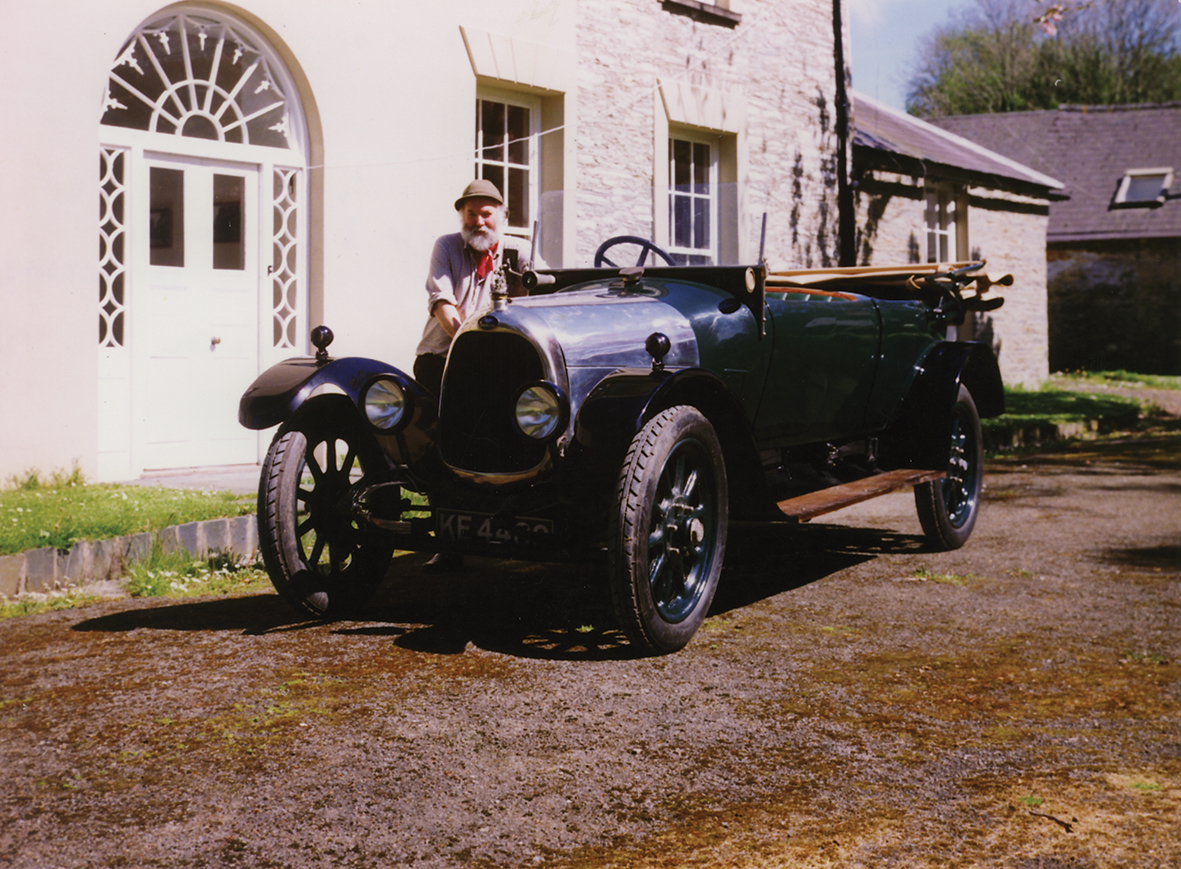
Michael will be 80 next year, but has no plans to stop working. He continues to expand his collection of motoring literature, which must be one of the most complete in private hands: he owns runs of all the most important magazines and journals of the 20th century. Does he know where everything is? “Someone once asked me if everything is in order. I said yes, one on top of the other.” The first book he acquired was The Wonder Book of Motors, when still at school: he swapped it for some birds’ eggs, much to the horror of the other boy’s mother. When he was 16, he saved up a pound to buy a four-volume set of Rankin Kennedy’s The Book of the Motor Car. It was there that he found a picture of an early 1920s Angus-Sanderson, whose pleasing lines, designed by Cecil Kimber, made him resolve to own one one day, which he did.
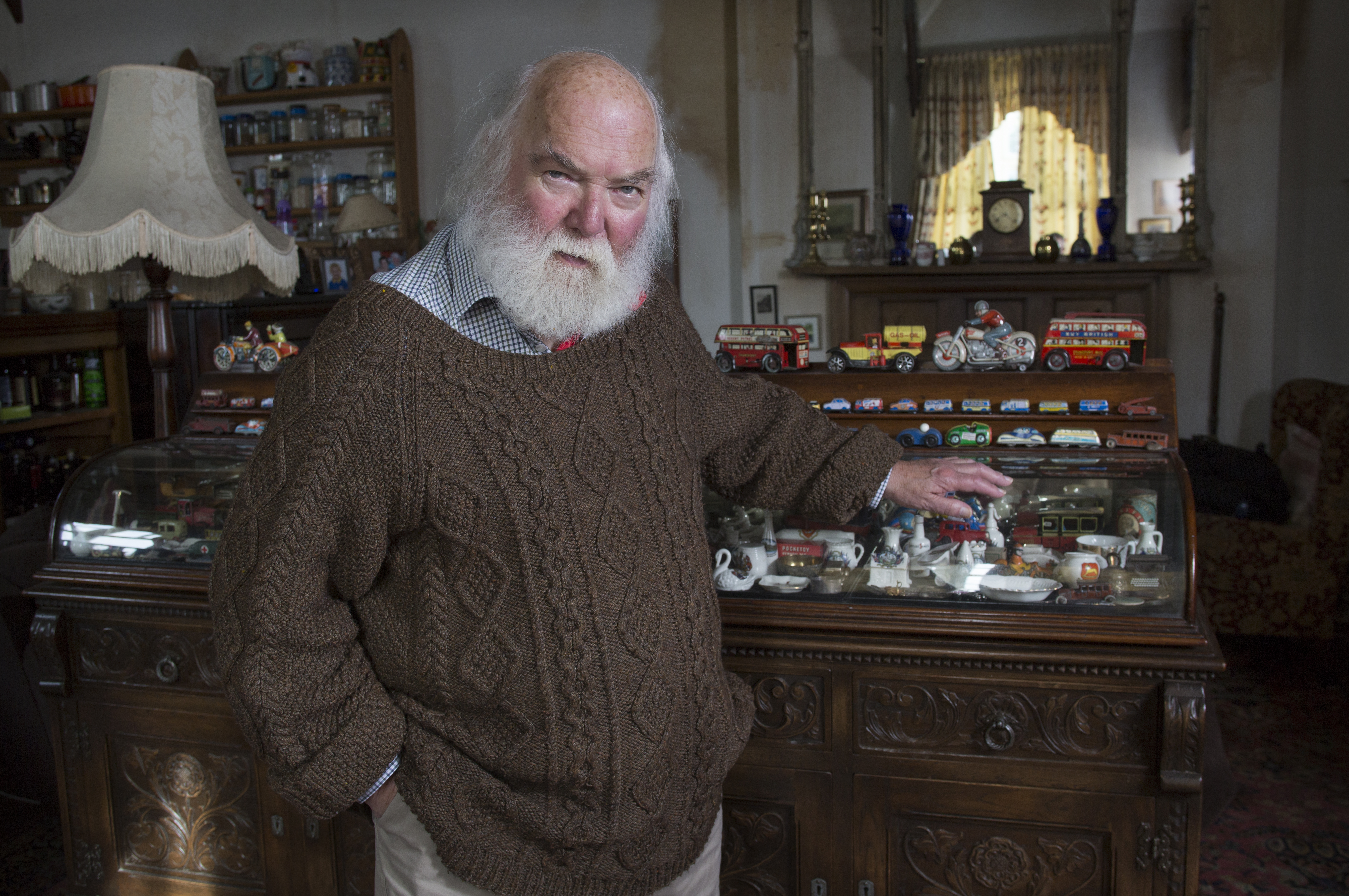
Upstairs, the house is crammed with cabinets of motoring paraphernalia: tin buses, lorries, pictures, photographs and toys. Mike still visits Beaulieu every year: he admits he couldn’t help spending £2000 on his most recent sortie. In one corner stands an ancient typewriter, surrounded by piles of correspondence, on which he still hammers out his columns. He learned to touch-type on a 1907 Remington and sees no reason to give up. “I get the ribbons from India, where they still use typewriters,” he explains. “I was glad to hear the Pentagon is going back to using them, as they can’t be hacked!” His wife, Pam, then transcribes the copy to be dispatched via email (“Pam is an angel, really.”) Alongside this work station is an armchair and telephone, where much of his business is carried out. Everywhere, there are framed photographs of children and grandchildren, a hint of his other great passion – his family.
Mike has been married twice, and had eight children and, so far, five grandchildren. As you talk to him, you discover he is an old-fashioned patriarch, in that everyone turns to Mike in a moment of need. The husband of one of his daughters, for example, recently had to fight deportation by the Home Office for being a Kiwi, despite being married with two children and in tax-paying employment. It fell to Mike to fight his cause: he wrote several letters citing the Human Rights Act to point out how unfair it would be, especially since his son-in-law is of British origin.
Plenty of people in the old-car world have turned to Mike in their hour of need, too, for help importing a car or reclaiming a period registration. For 40 years he was the go-to man for anyone faced with trying to get their head around the DVLA’s Kafka-esque bureaucracy. For a small fee, Mike would fast-track your application to the right department, and deal with all the boring admin, allowing countless period numbers to be resurrected and restored to their rightful cars. That sideline came to an end recently when the motoring club through which Mike pursued those activities decided it was too frightened of being sued, and pulled out of the scheme. The DVLA, in its perversity, refuses to deal with Mike as an individual. “In 40 years nobody has ever intimated to me that they wanted to sue – they’ve been all too grateful for the help,” he says. “But that’s the way the world is going. I still point people in the right direction when I can.”
Mike’s father worked as a chauffeur, so cars were in his blood from an early age. “I’ve always been interested in anything mechanical,” he explains. “I can understand mechanical engineering, but not theoretical engineering. I don’t know why, but a shutter comes down.” He grew up in Sussex and after leaving school got a job as a junior clerk with the Ocean Accident and Guarantee Company in Brighton, which was owned by the Commercial Union. He joined the motoring department, where his tasks included operating a fiddly Victorian mahogany switchboard. He showed early signs of initiative: whenever he was given a pile of documents to file, he would read them first, unlike the other clerks. This meant he was soon up to speed with the workings of the company, which stood him in good stead later on. Having studied technical drawing at building school, he was seconded to the fire department, where he helped draw plans for surveyors.
In 1956, he was called up for National Service and joined the RAF, as his father had done. He was posted first to RAF Shawbury, near Shrewsbury, where the school of Air Traffic Control was based. He recalls seeing dozens of Mosquitoes being dismantled and destroyed, only to find the type still in service when he transferred to northern Germany, where the RAF base at Schleswig was being handed over to the newly re-formed Luftwaffe as Germany was welcomed into NATO. He was later transferred to the far south, where he served as a target tow operator.
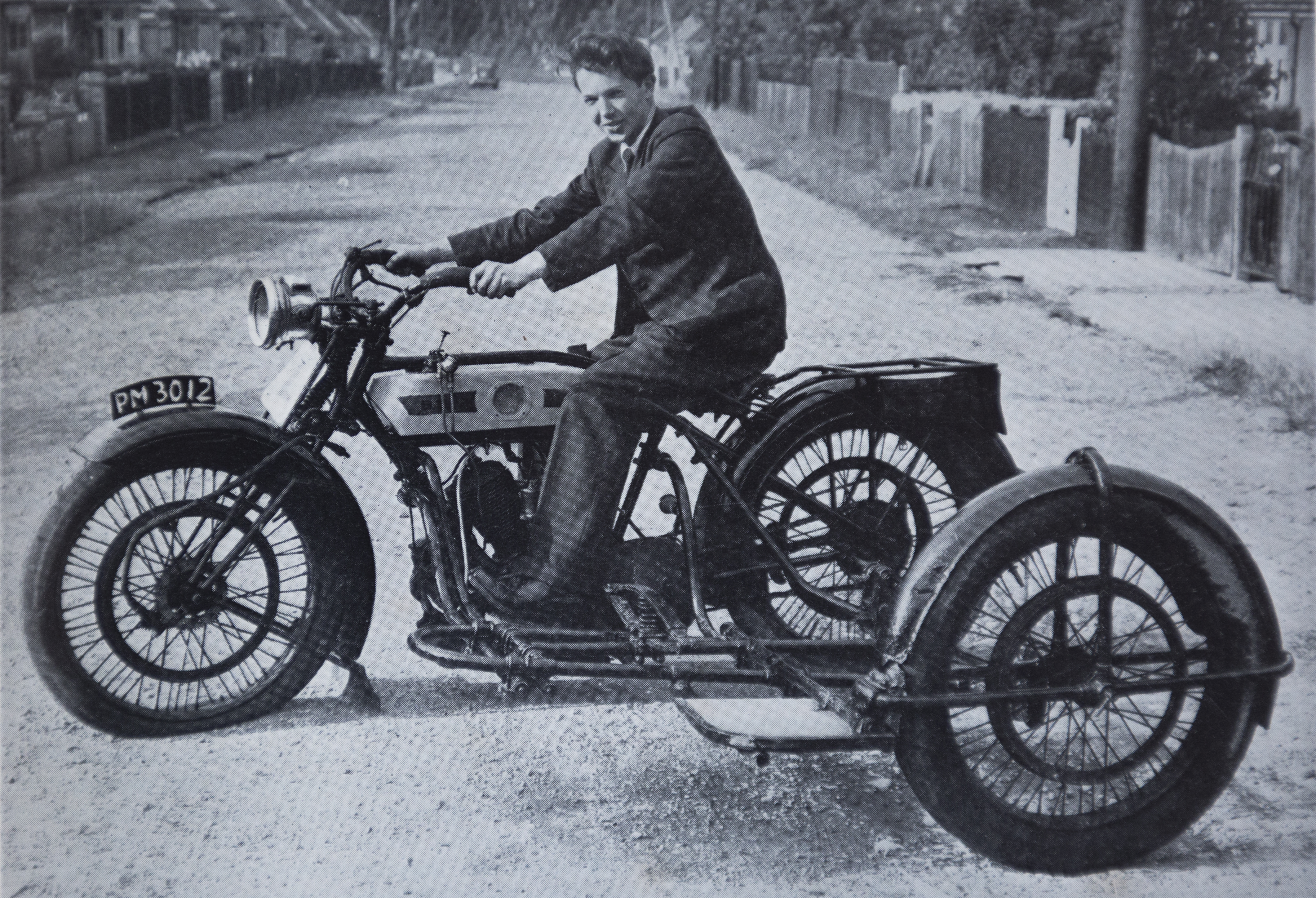
After he was demobbed, in 1958, his old insurance firm was obliged to take him back. But after the excitement of being abroad he found the work dull, and sought a new venture. One came up through his RAF friend Tom Bunce in Bournemouth. They needed someone on the debt collecting side of the business, which Mike says he took to “like a duck to water”. “It was great fun,” he recalls. “Within a year they had promoted me to collection manager in St James’s, London, and I had £800,000 worth of accounts under my control.” As you might expect, it was not without its hairy moments. On one occasion, while extracting a three-piece suite from a tenement flat in the East End, the child of the beleaguered family returned from school and burst into tears. His cries roused the neighbours just as the sofa got wedged on the stairs. At that moment, the hooter went off to announce it was knocking-off time at the docks. They only just managed to flee with their lives, narrowly avoiding a lynching from 30 dockers coming towards them arm-in-arm.
Another time, repossessing a Ford Zephyr from a Soho pimp, Mike noticed a gang of shady characters sitting on the wall by the car “sharpening their nails with razor blades”. So they went back to the yard, found the most powerful car they could get – a big old Pontiac – and returned with a length of rope, which they wrapped round the front bumper while one of them quickly got in. It all went to plan until the Pontiac roared off, taking only the front bumper with it and leaving the debt-collector sitting vulnerable in the Zephyr. He had forgotten to take the handbrake off. Happily, the shady characters found the spectacle very funny. They turned out to have nothing to do with the pimp in question, who sent a girl round the following week to pay his debt in full with a bulge of rolled-up fivers.
What a different time that was! Mike was later promoted to head up a new division of the business in Canterbury, by which time he had married his first wife. He had also started dabbling in old-car ownership, having saved up his clothing allowance during National Service and added it to the £27 10s cheque he got when he was demobbed. “I literally came out in rags: I had just the front of my shirt and the cuffs.”
His first purchase was a very tired 1934 Singer, advertised for £30 but bought for rather less after some stiff bartering. “It had a champagne cork in the front to stop the oil coming out of the crankcase. So you had to take the cork out to put the starting handle in, then put the cork back in once the engine was running, otherwise you’d get a face full of oil. It was a poor man’s MG. It had two spare wheels on the back, which meant the front wheels used to lift off the ground and you couldn’t steer. The tyres were bald of course, as they all were before the MoT.”
His friend Tom suggested a trip to their old haunts on the German Dutch border, so off they went. The Singer made it as far as Deest in Belgium before they broke a halfshaft. Mike wasn’t a member of the AA, let alone with European cover, but when a Belgian breakdown tricycle pulled up the man was all too happy to help, the British still being favourably regarded following the war. When they arrived at the local garage the owner turned out to be a Singer fanatic who had three of his own. He promised to fix the car and have it ready in a fortnight. When Mike returned two weeks later the garagiste wouldn’t take a penny. He advised Mike to sell the car as soon as he got home, so he was able to tell the buyer it had just successfully completed a Continental tour. Mike tells this story with a long throaty laugh, adding that the buyer turned out to have no cash. He did have a Riley Nine Monaco, though, so they did a straight swap.
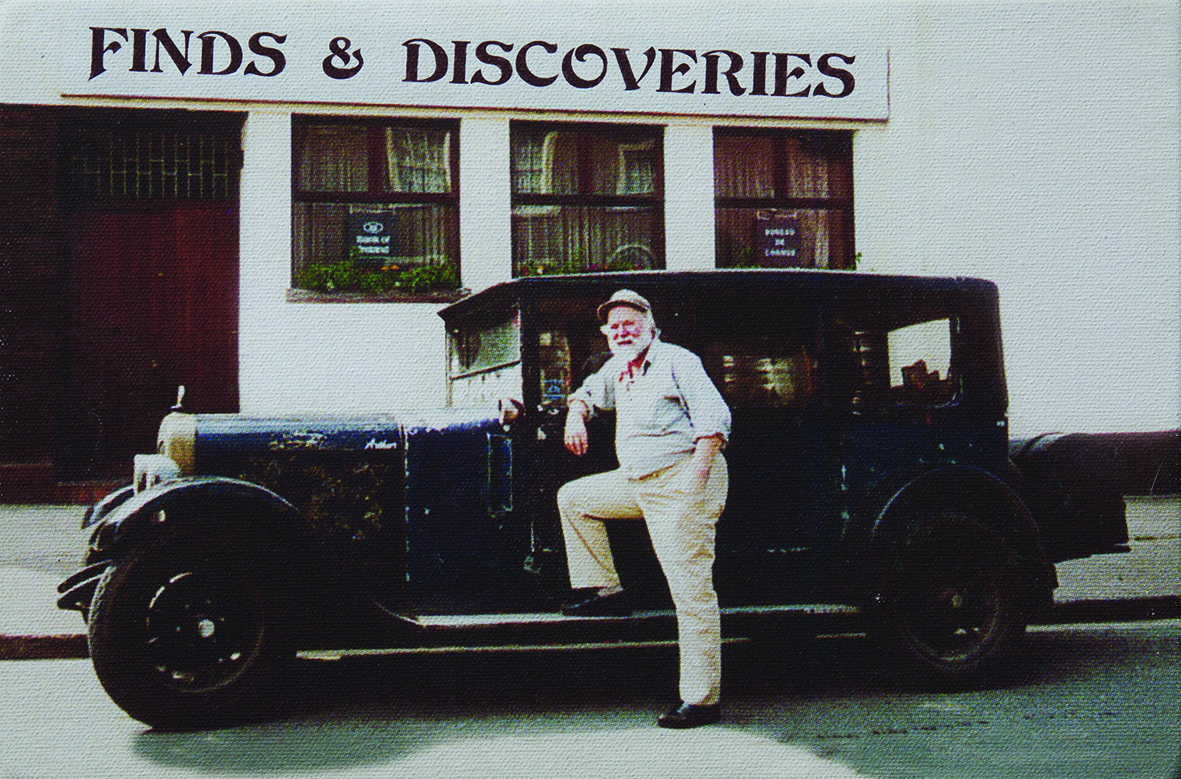
Mike’s taste in cars has always been for dependable forms of transport over anything expensive or flashy. “I wouldn’t have a Bugatti if you paid me,” he says. Why not? “For one thing, I don’t like Bugatti people, but I also think the cars are overrated. The chaps I know who have them have to be continuously tweaking them, because they go off so quickly. You tune them, you drive them like hell, then you have to mess about with them again. I couldn’t be doing with that.” He much prefers solid British marques such as the Riley, or the Angus-Sanderson he found in a yard in Tenterden in use as a timber tug. In 1982 he bought Arthur, an Austin 20 six-light saloon in which he did a quarter of a million miles. “I never came home on the end of a rope. I might have limped home once or twice, but we always made it. You could get in, start it, and you knew it would work.” Sadly Arthur, along with all the other cars, has gone now, but they live on in framed photographs on the walls.
By the mid-’60s Worthy was tired of debt-collecting so he went back to insurance, this time as a broker in the City. He did well, earning himself the nickname Czar Nicholas for his charismatic and persuasive manner. He was writing more by now, and resolved to risk going freelance as a journalist and writer of books. Of his various financial ups and downs, the end of his first marriage in the mid-’70s was perhaps the worst. He gave his ex the house and an allowance, and ended up back at his parents’ house with nothing but his books and a typewriter. It had been a difficult marriage. In 1971, their five-year-old daughter died after falling out of a window. Michael still looks at a photograph of her every day. That tragedy is, he says, the one thing in his life he wishes he could change.
By 1976, fortune was smiling upon him once more. Sotheby’s were looking to form a motoring department, and Michael Sedgwick put Mike forward for the job. He was an ideal fit. At first he was a one-man operation, doing everything from sourcing the cars to arranging the venues to ordering the stationery. But his easy manner and successful sales rate meant he quickly became a respected figure in the auction world. “The trick was to have three satisfied parties – a happy buyer, a happy vendor and a happy Sotheby’s shareholder. In the end, everyone wants the same thing, to sell the cars.” Years later, when Robert Brooks set up his own auction house, he poached Mike and Malcolm Barber to join him, which led to the collapse of Sotheby’s car department.
Also in 1976, he met Pam in a pub in Sussex. She then worked for him as a secretary at Sotheby’s. He enjoyed a run of good luck that year, winning second prize in a crisp packet competition. He can still remember the winning poem he wrote in the pub: ‘Some seek golden plunder / But give me a home / For those who roam / Good ale and Golden Wonder.’ The prize was a Ford Escort, but it was the 1970s. Ford workers were on strike and wouldn’t deliver the car. After some argy-bargy, in which Mike threatened to report the company to the Daily Express’s consumer pages, he received a cheque for the cash equivalent. This, combined with an unexpected legacy from his first wife’s aunt, meant he was soon back on the property ladder. He bought a mid-terrace Victorian laundry worker’s cottage on Ditchling Common.
His companion prior to Pam was an aged cat, Puss Cat, and Mike was wary of living with another person. But when he was sent to organise an auction for Sotheby’s in South Africa, he asked Pam to move in and look after the cat. The probation period was a success (the cat didn’t die), so he invited her to move in permanently. They have been together now for more than 40 years. Mike’s collecting of magazines and paraphernalia was in full steam by this stage, and one evening an architect friend came for dinner. “What’s that funny noise?” he asked. “Oh, that’s just the house groaning,” said Mike. “It’s always doing that.” When the architect was shown upstairs and saw the volume of material, he at once spotted the cause of the problem and urged them to find a bigger house, pronto.
Which is how they came to live in Wales. The same friend had a cottage near Carmarthen, so Mike and Pam took a week’s holiday there and spent the time looking at property. The first house they saw was Glaspant Manor, a semi-derelict Georgian house on a lake, with attached farmhouse and barns, and they knew instantly it was perfect. They bought it with Pam’s parents, so the whole family decamped to west Wales. During the 1970s Glaspant had been owned by Angela Lyle, heir to the Tate & Lyle fortune, who had built a recording studio in one of the barns. It became a secret retreat for rock musicians of the time, including Black Sabbath, Freddie Mercury and Genesis, who recorded a whole album there.
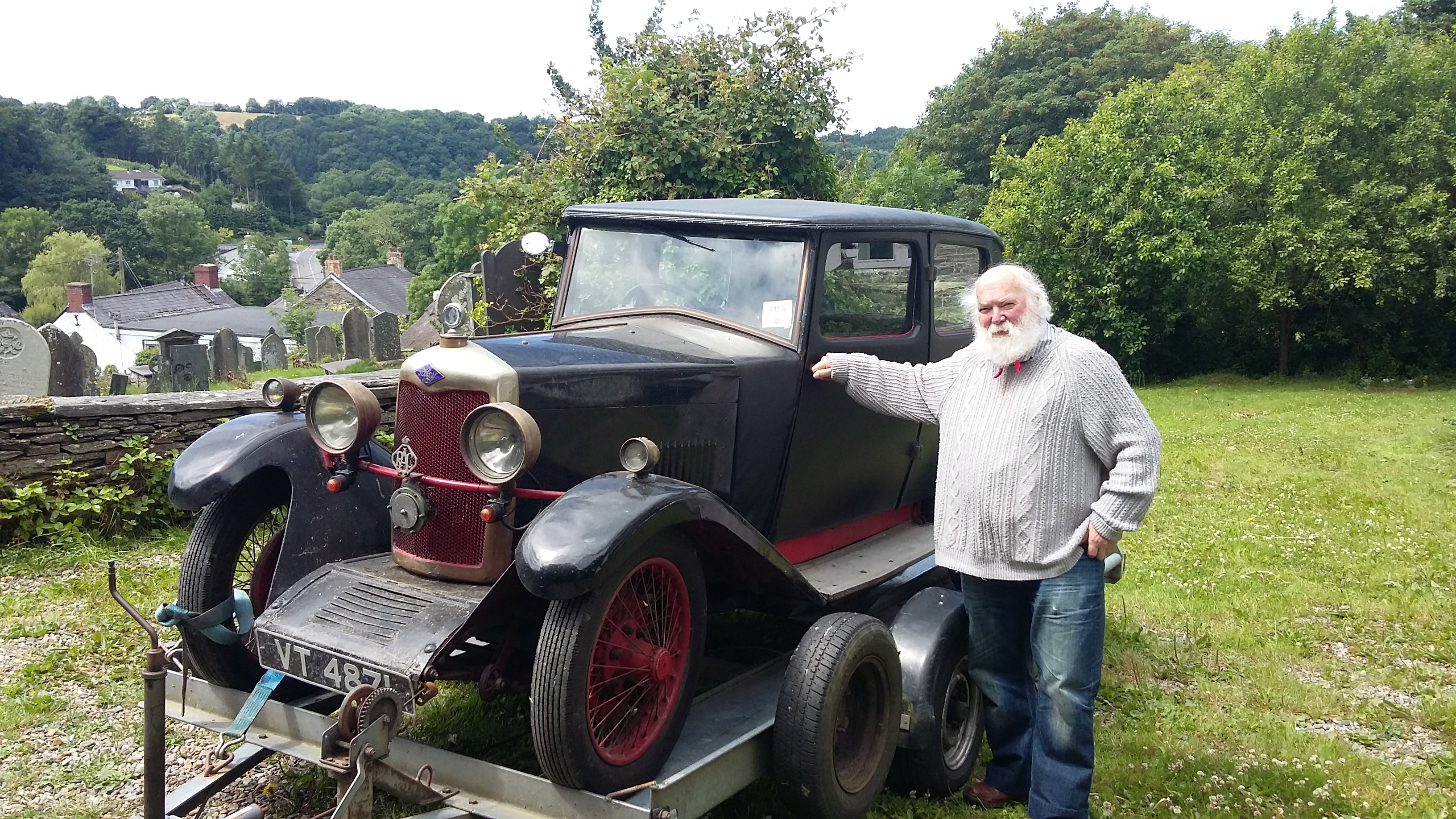
After 27 blissful years, during which Pam and he raised their four children, the family sold up and downsized to smaller homes in the area. Pam’s parents bought a bungalow nearby. There was no garage at the Old Schoolhouse, so Mike had one built in oak by a local craftsman. In 1996 he suffered a heart attack, at which point his doctor banned him from driving open cars, so he sold the Angus-Sanderson and stuck to Arthur. His last car was another Riley Nine Monaco, but after having his knees replaced he found it impossible to get in and out of. Fittingly, it’s now in The Automobile’s Oily Rag Collection. He still drives, but is just as happy to be driven. When he’s not working, or reading, or augmenting his library, his abiding joy is his family, even though not one of them shares his interests.
“I’m not a rich man,” he says. “I would be if I hadn’t had kids. But they keep you young.” And please keep sending him your finds and discoveries. They’re the thrills that keep us all young.
Excellent tale Thank you
A truly nice man….a gentleman no less.,RIP.
This is the perfect template for a semi-excentric life well lived…Godspeed, Mike
He unearthed many forgotten cars.
‘Young at heart’ MWW was always a pleasure speak to down the ‘phone. His sleuthing skills and DVLA intercessions were most reasonably priced and always promptly concluded. Why they turned against him was a source of great anguish to him. My abiding visual memory ; sitting in the most comfortable vintage or Edwardian car at an auction, watching proceedings with a wry smile a mixture of the benign and quizzical. RIP.
is it 5 months since we lost Mike? Unbelievable, but I know I will never forget him. I met Mike in 1987 when visiting England. He had the remains of an early Phoenix car for me to arrange to get home to New Zealand (along with my new toy – a 1930 Riley Monaco) – but we corresponded periodically, especially when I found an orphan make mouldering in down under NZ, and I found Mike so knowledgeable, and prompt in his replies. I wonder if someone somewhere will collate all his articles, and stories, into a book? Would be a very large volume, or two, or three! But what a lasting memorial that would be!
About 1985 I had the pleasure of visiting MWW at his home to give him as much information as I had on Pre 1940 Triumph cars as the basis of an article he wrote on the marque for the Automobile magazine. He was an absolute joy to meet and a mine of information enthusiastically offered. Today I found one of his books on Automobilia in which is a photo and brief description of a joy stick operated signal system from the early 1930s. Mike didn’t mention the name which is ‘Birglow’ auto signalling system but as it was rather difficult to operate via bowden cables, he noted that it was an abject failure. It is rather difficult, in fact possibly dangerous as the driver could possibly run out of road while trying to convey his wishes during driving. It was in the Kachadourian collection. I have only seen two of them, one that I have and another in the late 1970s at Beaulieu auto jumble on sale at £400.00.