
Our Publisher takes a stroll round his favourite European show and picks out some of his personal highlights
Like Beaulieu, Rétromobile has become an unmissable fixture for many of us in the old-car world. More than 130,000 fanatics attended this year, a record. But, unlike Beaulieu, Rétromobile is changing, and changing fast.
The event was started 45 years ago by Francois Nelçon and a small group of collectors whose overriding passion was for the lesser known, under-appreciated marques of prewar France. The natural result was that the show soon came to be characterised by a seemingly endless succession of dramatic barn finds: cobweb-encrusted relics dragged from the leaky lean-tos of ageing scrap merchants, hoarders and brocanteurs all over rural France. A fresh sprinkling of these discoveries would appear each year, strictly as found, on the stands of specialist dealers such as Bruno Vendiesse, Christoph Gröhe, Gregor Fisken and Ivan Dutton in the exhibition itself. Others would be consigned to auction, culminating in Artcurial’s extraordinary sale of the Baillon hoard in 2015.
This year, for the first time, treasure of such early date was conspicuous by its absence, and we have to ask why. Is it that the event’s organisation is now in the hands of a major exhibition specialist with no automobile background? Is it that those broken down barns and overgrown hedgerows have been emptied of their hidden gems? Or is it that tastes are changing, as a generation for whom such relics re-kindled long-forgotten nostalgia is dying off, replaced by relative youngsters for whom the 1960s and ’70s represent the distant past?
For me, in fact, Rétromobile 2019 was even more enjoyable than usual because it celebrated the anniversaries of two marques particularly close to my heart, One, a centenary, was that of Edouard Ballot’s engagement of the legendary Swiss engineer Ernest Henry to help launch his eponymous brand.
Historic events organiser Peter Auto found space on its stand for the ex-Crowley Milling three litre straight-eight that scored Ballot’s only F1 victory, a win in the first Italian GP of 1923. The car is no restored and in the hands of irrepressible Austrian Ballot fanatic Alexander Schaufler, who was on hand with advance copies of the long-awaited two volume history of the marque just published in the US by Dalton Watson. As the lucky owner, in my time, of two ultra-rare twin-cam Ballots and contributor to the book of a chapter on the 2LS, I was happy to help get it off the ground.
The other anniversary that resonated with me was the 50th of what I am told is now known (it was I, in fact, who coined the term) as the original ‘supercar’. Lamborghini’s Miura, too, is about to be immortalised in an important book to be published by leading dealer Simon Kidston. The preponderance of these eternally good-looking mid-engined V12 coupés throughout the exhibition, most at eye-watering prices, really set me thinking, comparing Ernest Henry’s achievement with that of Bizzarini and Dallara in launching two brand new marques with such technical emphasis on cutting-edge engineering in times of economic uncertainty.
When Ferruccio Lamborghini first hove on the scene, unannounced and unknown except as a tractor and air-con manufacturer, at the Salone di Torino in November, 1963, I was among many visitors who called his Scaglione-styled prototype (in print, too, to my shame) the ugliest car in the show. Two years later, when my dear friend Henry N Manney III got to drive one of the first Touring-bodied production cars and wrote about it rapturously for me in Car, the magazine I had just re-titled and re-launched as its editor, I was forced to eat humble pie.
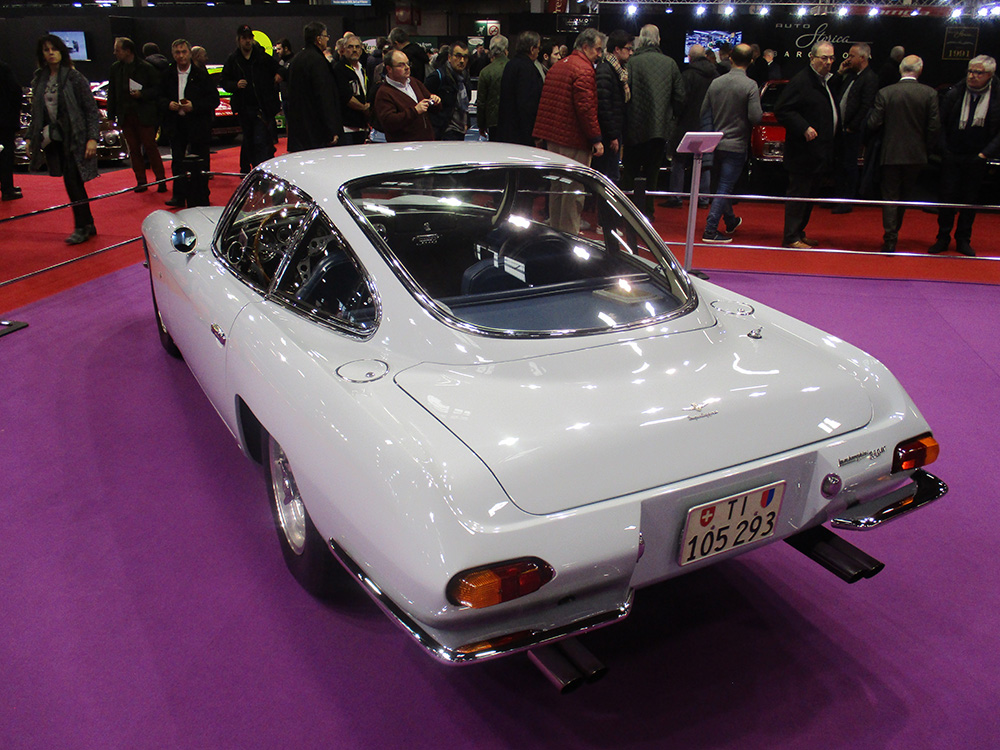
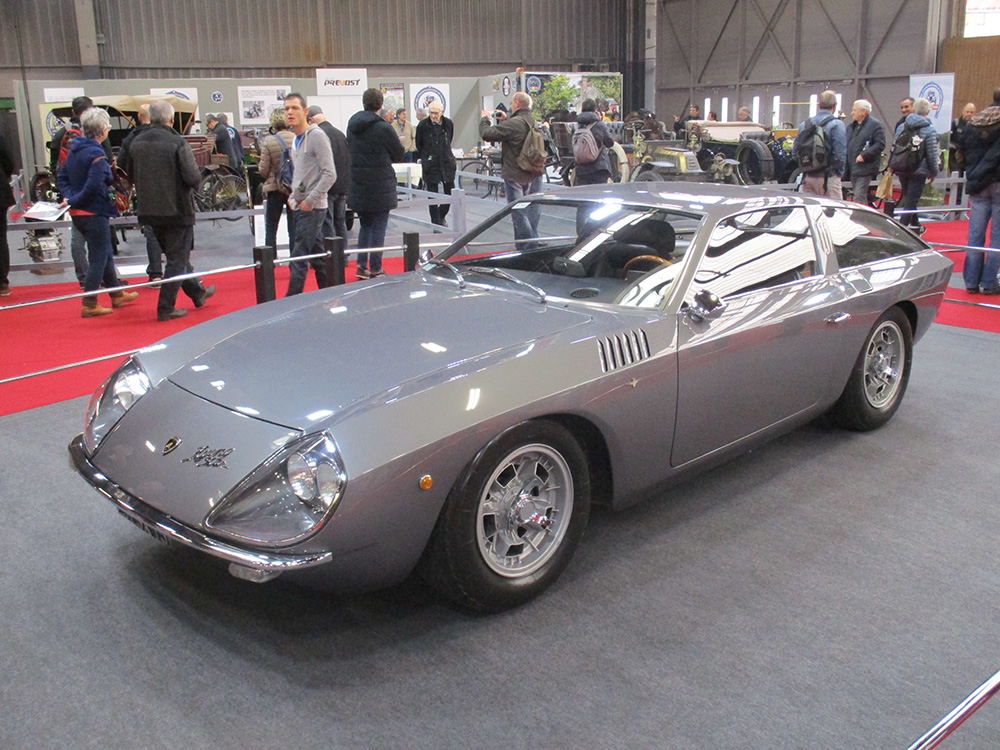
Much later, I owned one of those marvellous 350GTs, the only one with rhd, so it was a joy to see them celebrated alongside the Miura in Paris. The line up included a rare, still alloy-bodied ‘interim’ model with the 3929ccengine of the later 400GT 2+2, andeven the surprisingly elegant Flying Star, Superleggera Touring’s last hurrah and the car they should have produced in place of the disappointing Islero.
Among several 350GTs on show, all at prices way north of the £2000 I paid for mine was a very early Swiss-delivered example, chassis 0106 (mine was 0172), again on Kidston’s stand. Like the one Henry Manney had tried all those years ago, this was one of an initial handful with a one-piece front bumper, vertical grille bars and a single seat for a third occupant who had to straddle the transmission tunnel.
I was curious about that car’s bonnet badge, which was red and white instead of black. Kidston explained that the correct badges failed to arrive on time for despatch of the first few production cars for display at various shows (this was number six), so substitutes from Ferruccio’s nearby tractor factory were hastily found and fitted…
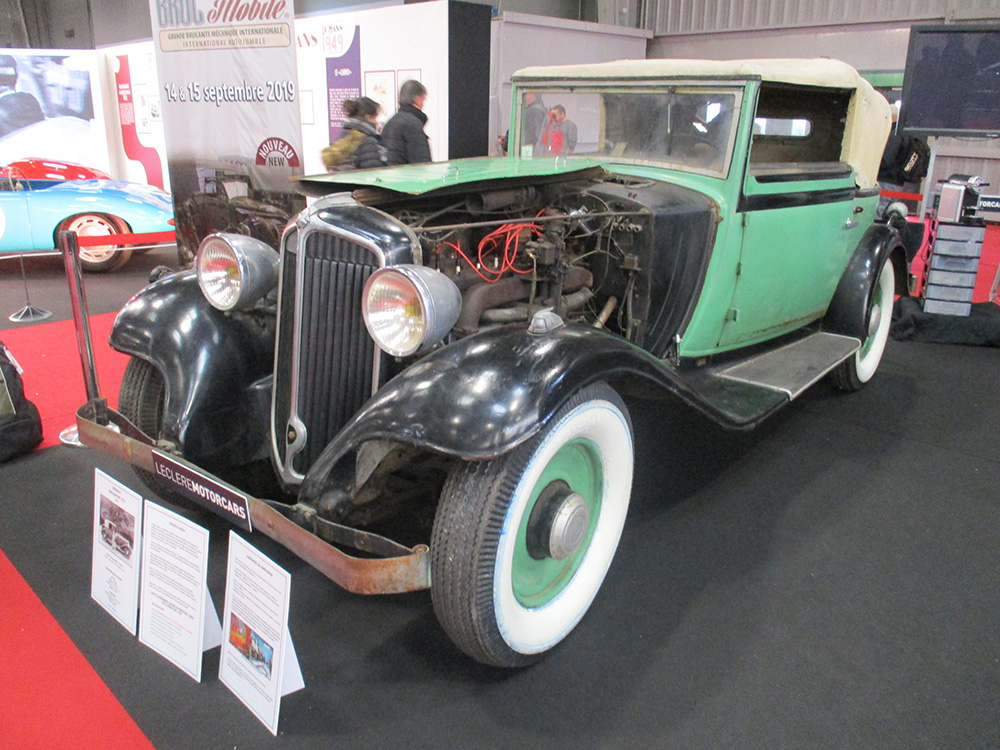
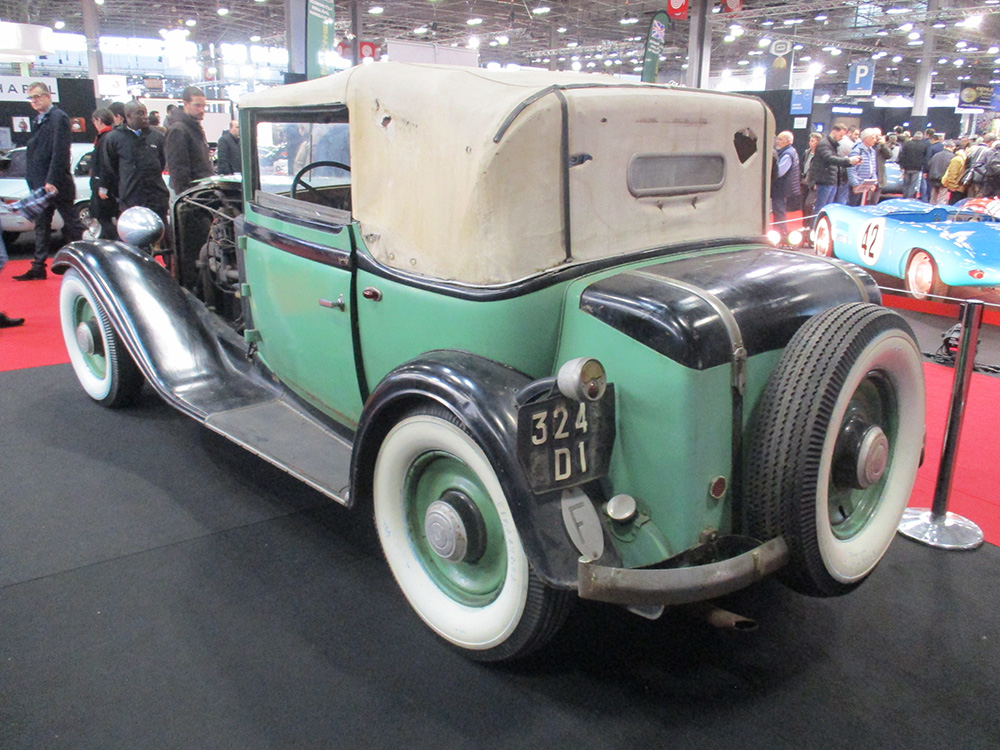
One of the very few pre-WW2 Oily Rags on show this time was a handsome Renault Nervasport coach décapotable dating from 1933. These are big cars, with a Chrysler-like prow beneath which lurks a 4241cc straight eight boasting 100bhp. This one was in a reassuringly original state, its interior mostly there but very tired apart from the front seats, which sported new covers. The pale canvas hood was full of random rips and tears which no-one, mercifully, had tried to disguise.
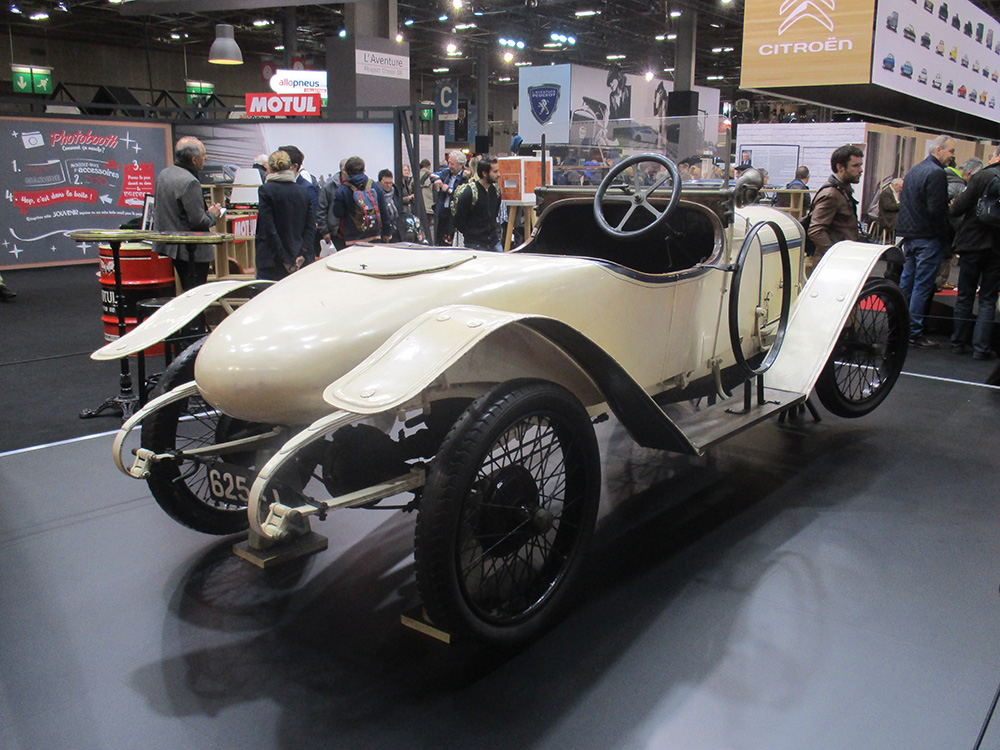
Nearby, a rare Sigma two-seater runabout of 1916 went one better, still with its somewhat stark original interior (there never were any instruments) and tyres that were not only bald but had long strips of rubber missing from the sidewalls. Miraculously, they still held air.
Upstairs among the club stands, Salmson devotees were crowding round a particularly handsome two-seater in white, with lovely butterfly wings. It turned out to have been built recently to a design by Labourdette, perhaps the greatest of Parisian coachbuilders, that was never carried out in period.
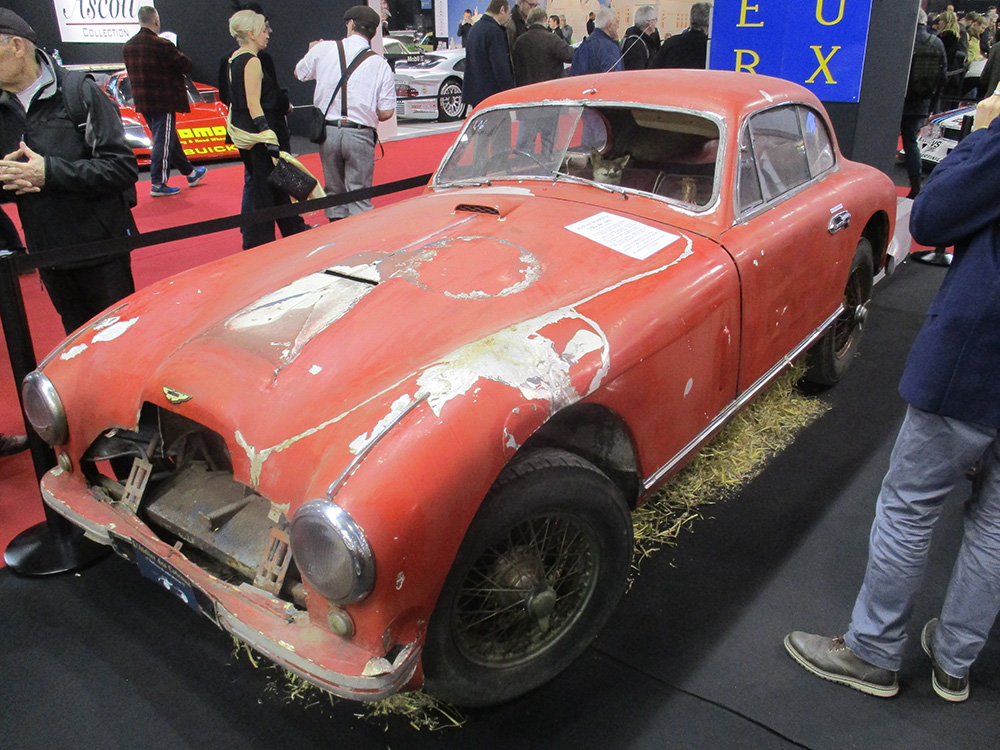
An early postwar barn find guaranteed to get me salivating in spite of myself (I had rebuilt one at vast cost in the 1990s: see The Automobile, June, 1999) was a 1952 Aston Martin DB2. This was one of those very early cars with Superleggera-style Perspex windows in plated frames and delicately moulded aluminium bumper strips running all the way along the sills as well as round each end. It had clearly come from a neglectful French home and had lost much of its front end, so I found it hard to tell if, like mine, it had been one of the pre-production handful fitted with a three piece grille like that of the so-called DB1. Displayed on the stand of Ateliers des Coteaux, based close to Lille, it was listed for ‘complete restoration’ – for better or worse.
Two other early postwar offerings that rewarded close attention included, on the ground floor stand of the Toulouse auction house Machoïr, one of only a handful of known survivors of Invicta’s last model following the firm’s brief revival in 1946, the Black Prince. Still retaining its mouth-watering but, in service reputedly disappointing, twin overhead camshaft three-litre Meadows engine and semi-automatic Brockhouse gearbox, this one, a drophead four-seater, had clearly been off the road for a very long time but looked mechanically capable of Oily Rag rehabilitation. Its original red leather interior was mostly there, and the instrument panel had its instruments and minor controls. As for the handsome but heavy and rather formal coachwork, it had lost a headlamp lens, and the paint and hood fabric needed help, but the story could have been much worse. Potentially, one would have thought, a rewarding project.
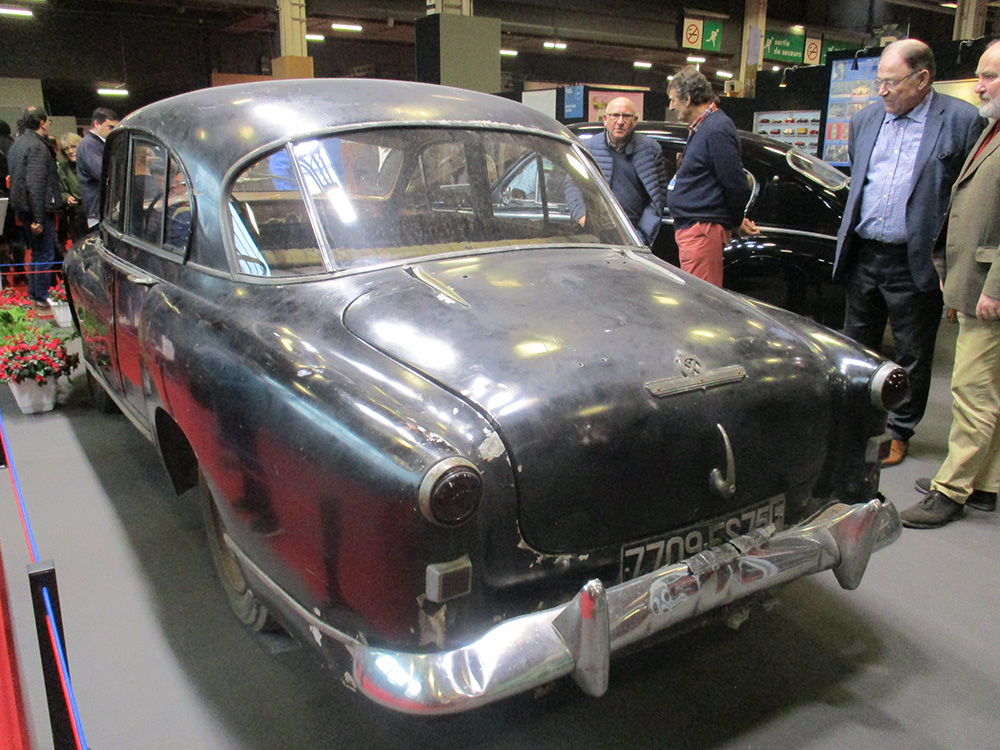
Tucked away in one of the vast upper pavilions, an equally precious rarity in similar condition awaited inspection on the stand of the Club Hotchkiss-Grégoire, an organisation we hardly expected ever to come across given that only a 245 of these impossibly complex and costly J A Gregoire-designed saloons left the factory in the 1950s before sending poor old Hotchkiss to the wall. Alongside a well preserved standard model like ours (see The Automobile, August, 2017) stood a variant we had never even heard of, looking very sorry for itself but, again, eminently saveable.
Numbered 745 (ours is 645), this was a one-off built by Chapron on a standard cast alloy chassis and called the Monceau. Of three-box form rather than the standard fastback, it was clearly meant to echo the lines of a contemporary Buick that the management felt sure (on no discernible evidence) was what every well heeled French businessman secretly lusted after but was too patriotic to buy. It was, we were told, intended to be subcontracted to Facel for manufacture at lower cost than poor Hotchkiss could manage. Oh, how they must have cried when the project fell apart, consoling themselves with a last gasp proposal to put the model’s water-cooled, flat-four power unit and fwd in a Renault Frégate shell already in production at Facel. Perhaps fortunately, that one got nowhere…
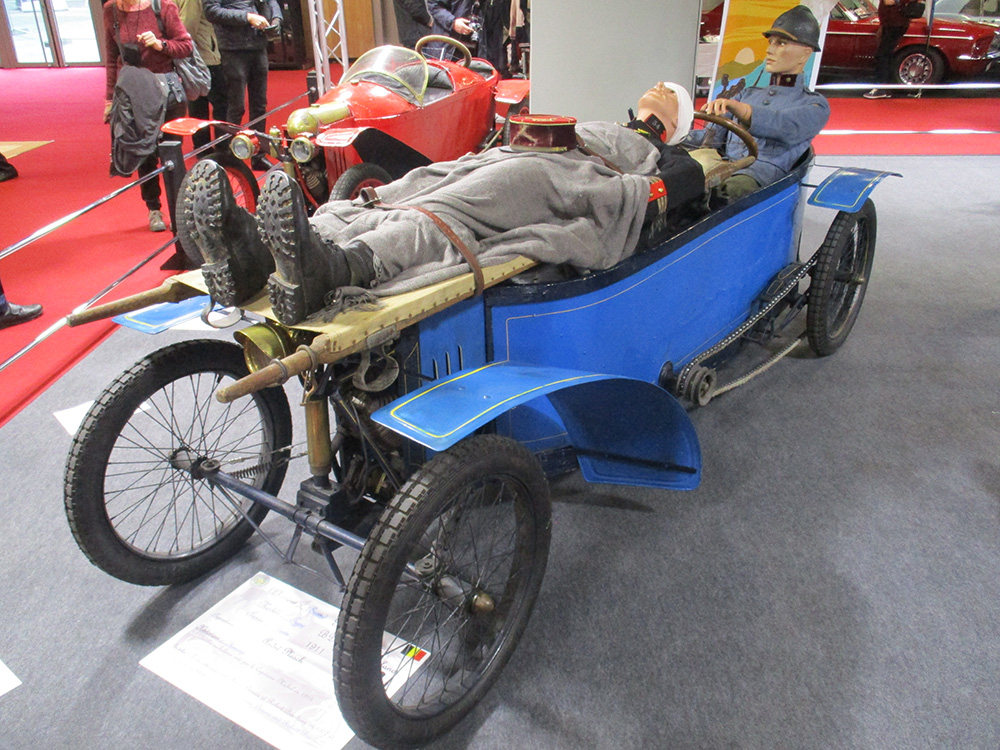
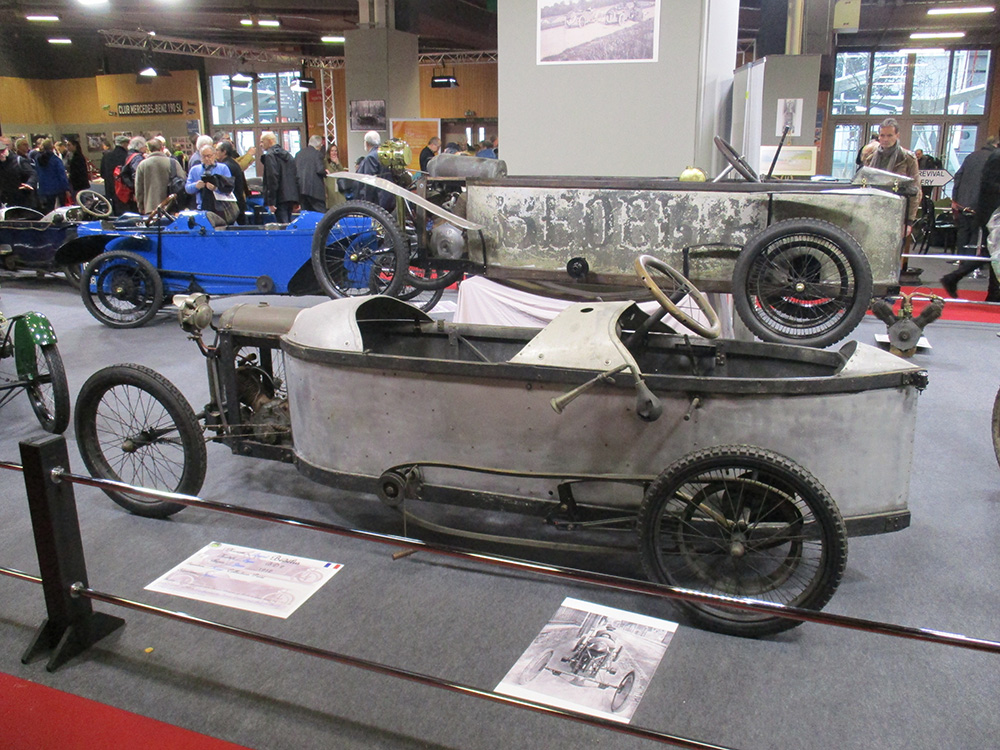
Then, finally, there were the Bédélias! We have always harboured a hankering for one of these eccentric contraptions and I, for one, felt this gathering of no fewer than 13 survivors did the forgotten marque splendid justice. Centrepiece of the display was André Plasch’s very original example, kitted out as a Great War ambulance complete with blood stained blessé lying full length on a stretcher, somehow justifying the manufacturer’s dotty decision to place the driver at the extreme rear, overhanging the back wheels. An accompanying period photograph proved the authenticity of the arrangement.
The Bédélia was one of the more bizarre cyclecars to be sure, but it lasted longer than most. Its outlandish coachwork concealed a surprisingly rigid lightweight chassis, and the air-cooled vee-twin engine was said to be robust. Even the transmission arrangements, with a long leather belt looping round a pulley attached to the crankshaft and finding its way back to engage with a clutch of different sized blocks on the left hand back wheel, seems to have met with approval despite dragging on the ground in top and calling upon the driver to flick it manually from one ratio to the next. Hammock seats (two of them, the passenger’s closest to the accident), wire and bobbin direction and a steering wheel with wooden rim and wire spokes like those of a tiny bicycle only add, in our eyes anyway, to its charm.
Most of those on show had been restored in one way or another, and some modified, but one stood out, evidently complete and very much dans son jus. Our joy in learning it was for sale turned to shock on being told the price required: €80,000.
So very French. So very Rétromobile. Let us all hope the new promoters get the message.
Thanks for this wonderful information. My only problem is I am unable to recognize
the various models on your display.
I will certainly be making every effort to visit on my next trip.